A Brief History of Tea: From Ancient Leaves to a Global Ritual
Tea’s history begins in a haze of legend, the kind where stories feel half-mythical yet somehow fitting for a drink that has accompanied human civilization for millennia. One tale says the Chinese emperor Shen Nong was resting beneath a tree in 2737 BCE when a few leaves drifted into his boiling water, tinting it with a faint aroma. He tasted the infusion, found it refreshing, and unknowingly sparked one of the world’s most enduring cultural traditions. The truth is harder to pinpoint, but the spirit of that story still captures something honest about tea: its origins feel both humble and quietly transformative.
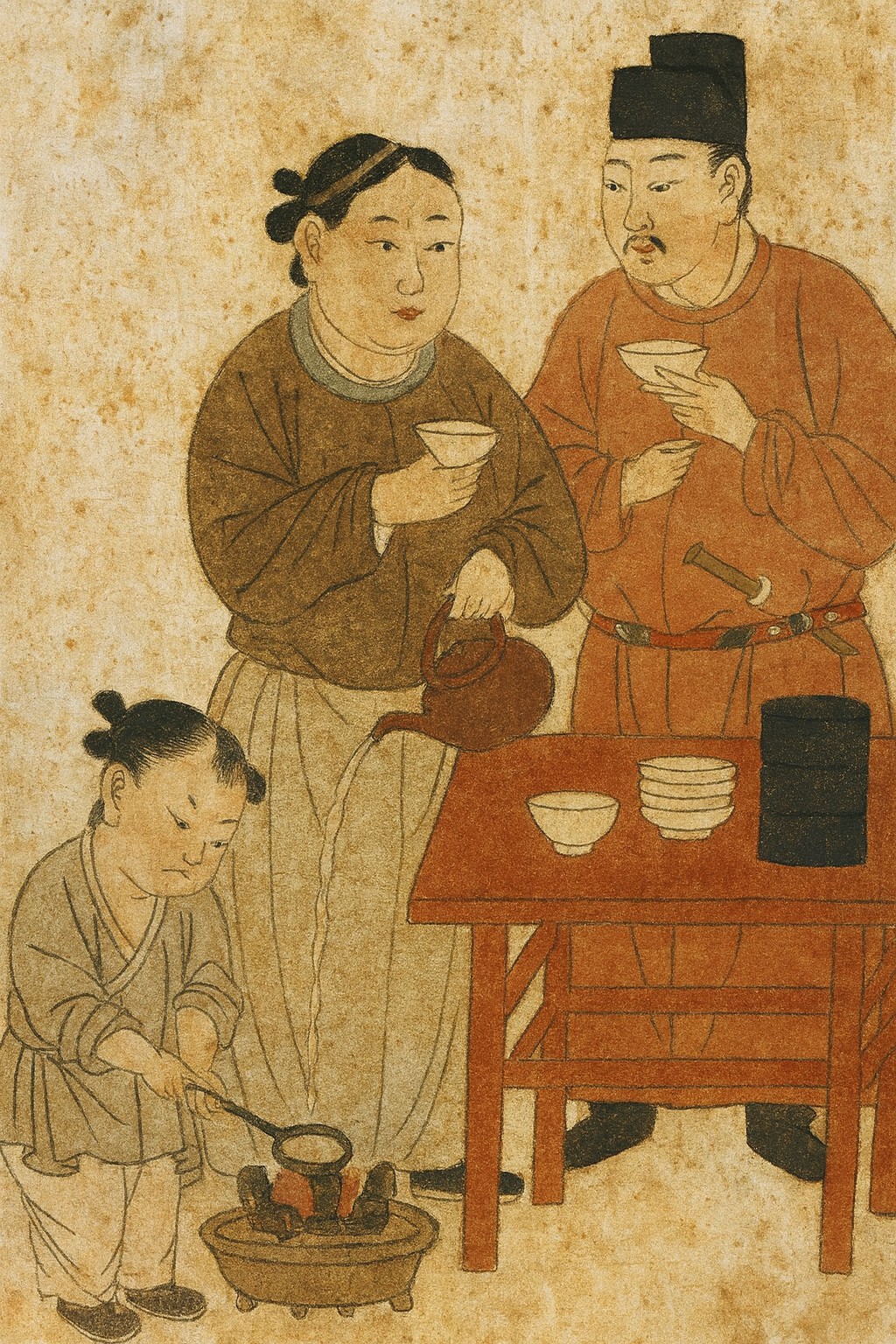
By the time written records appear, tea was already anchored deeply in Chinese society. At first it was used as a medicinal herb—bitterness often signaled healing in ancient practice—but gradually it turned into a daily drink. During the Tang Dynasty (618–907 CE), tea blossomed into an art form. Poets wrote about it, monks refined its preparation, and traders began carrying it along the Silk Road. Powdered tea came into fashion, whisked into a bright, almost frothy mixture that demanded skill and a touch of grace. This powdered style would later travel to Japan and evolve into the green matcha used in the Japanese tea ceremony.
Japan’s encounter with tea, especially from the 9th century onward, layered spiritual meaning onto the drink. Buddhist monks brought tea seeds from China, believing the beverage helped keep them alert during long hours of meditation. Over time, Japanese tea culture became a world of its own—formal, deliberate, and rich with symbolism. Sen no Rikyū, the 16th-century tea master, shaped what we now recognize as chanoyu: a ritual defined by simplicity, modesty, and deep attention to detail. In Japan, tea became less about refreshment and more about presence.
Meanwhile, tea kept evolving back in China. Loose-leaf tea gradually replaced powdered forms, and new varieties emerged—green, white, oolong, black—each shaped by subtle differences in how leaves were heated, rolled, and dried. By the Song and Ming dynasties, the aesthetic surrounding tea shifted toward appreciating the leaf itself. Porcelain and clay teapots became essential tools, and artisans developed whole new brewing traditions focused on fragrance and clarity.
Tea’s journey westward began in earnest through trade. Arab merchants carried early forms of it, but it was European explorers in the 16th and 17th centuries who introduced tea to continental society. Portugal and the Netherlands were the first to adopt it, bringing it initially as an exotic luxury. By the mid-1600s, Britain had embraced tea with an enthusiasm that would end up shaping global politics. As demand rose, the British East India Company orchestrated vast trade networks from China to India. The company’s monopoly and aggressive taxation helped spark the Boston Tea Party in 1773, turning tea into a symbol of rebellion in American history.
The industrial era transformed tea again. Britain, seeking control over supply, cultivated massive tea plantations in India and Sri Lanka. These plantations, built on colonial power structures, produced black tea on a scale that flooded global markets and standardized the drink in many parts of the world. Chai culture in India developed from this period—locals adapted the British habit of adding milk and sugar, but made it bolder, richer, more spiced, and unmistakably their own.
In the 20th century, tea settled into everyday life worldwide. Modern conveniences like the tea bag—accidentally invented in 1908 when a merchant sent samples in silk pouches—made preparation quicker. Iced tea, popularized at the 1904 St. Louis World’s Fair, introduced a breezy, summery version of the drink. Yet even as tea became easier and more casual, ceremonial traditions survived: Chinese Gongfu brewing, Japanese matcha rituals, Moroccan mint tea, Turkish çay, British afternoon tea—the list goes on, each with its own heartbeat and charm.
Tracing tea’s history feels a little like watching cultures talk to each other across centuries. The drink has traveled through empires, religions, trade routes, revolutions, and quiet family homes, reshaping itself as it moved. And through all those shifts, tea managed to remain something simple: leaves steeped in hot water, shared for comfort, reflection, or conversation. Its history stretches long behind us, yet every fresh cup still feels gently timeless—fresh steam rising from ancient roots.
Sponsored by Orchid Society:
- Growing Orchids Without Soil: A Gentle Guide to Hydro and Semi-Hydro Success
- Orchid News Digest — Late November 2025
- Orchid Travel Guide: Where the World Blooms
- Orchids in New York: A Little Guide for Obsessives, Wanderers, and Anyone Who Gets Emotional Over a Good Phalaenopsis
- Beginner-Friendly Orchids
- Deep Burgundy Phalaenopsis — A Jewel-Toned Hybrid with Attitude
- Fertilizing Orchids
- How to Propagate Orchids (Without Losing Your Patience)
- How to Water Orchids Properly
- Inside a Professional Orchid Greenhouse
- Orchid Shows & Events Calendar 2026